


A smooth shipping container delivery rarely happens by chance. Long before a truck arrives on site, a series of decisions take place behind the scenes: planning, coordination, safety checks, documentation, and customer communication. These steps determine whether a container placement is efficient and controlled or delayed and complicated.
In the container industry, it’s easy to focus on the steel box itself. But the real value often lies in the logistics that move it. From inquiry to delivery, container logistics is a system built on communication, process, and precision. Increasingly, women are among the professionals shaping that system.
At ATS Containers, most day-to-day office operations are led by women. Quoting, scheduling and coordination, documentation, customer service, marketing, and management are largely handled by women who ensure that each delivery is properly planned before a truck ever leaves the yard. Women contribute across office and yard roles where safety and precision are essential. The result goes beyond representation. It shows up in execution, reliability, and the customer experience.
Containers Are a Logistics Business First
Shipping containers are known by many names: freight containers, cargo containers, ISO containers, sea cans, C-cans, dry vans, steel boxes. Regardless of terminology, customers expect the same outcome: a secure storage unit delivered on time and placed exactly where it needs to go.
That final placement is often the most sensitive moment in the process. Tight access points, overhead wires, uneven ground, winter conditions, active job sites, and competing expectations can all intersect. The success of a delivery is often shaped well before the truck arrives, through the details addressed earlier in the process. This is why container logistics depends as much on planning and coordination as it does on the equipment itself.
The Invisible Work That Makes Deliveries Succeed
Container delivery relies on more than the driver behind the wheel. It is a coordinated system, and women are playing an increasingly central role at every stage.
Customer Service, Quoting and Sales: Where Container Decisions Begin
Many delivery issues begin with a mismatch. The wrong size, an unsuitable configuration, or assumptions about site access can quickly lead to delays or re-deliveries. Strong office teams help align these details early by asking targeted questions and discussing key delivery factors, including:
- What will be stored inside the shipping container and how it will be accessed
- Container size and door configuration in relation to the truck cab for seamless offloading
- Ground surface preparation and stability for safe container placement
- Required overhead and side clearance around the container
- Exact placement location and orientation on site.
These questions are a practical part of reducing safety risks, minimizing delays, and helping customers choose a solution that works for their site and workflow.
Coordination and Administration: Where Systems Are Kept in Sync
Behind every container delivery is a layer of operational coordination that keeps information moving as efficiently as equipment. Coordinators play a critical role in documenting inventory, tracking yard transfers, managing work orders for custom container modifications, and supporting accounting processes.
This work ensures that the right container is prepared, modified, and released at the right time. Accurate records help yard teams locate units quickly, support safe handling procedures, and verify that modifications meet customer requirements before delivery.
Coordination also creates operational continuity. By maintaining clear documentation across inventory systems, work orders, and internal approvals, coordinators keep teams aligned and informed at every stage of the process, from the office to the yard. While this work often happens behind the scenes, it is essential to maintaining consistency, safety, and accountability in container logistics.
Yard Operations and Transporters: Where Preparation Meets Execution
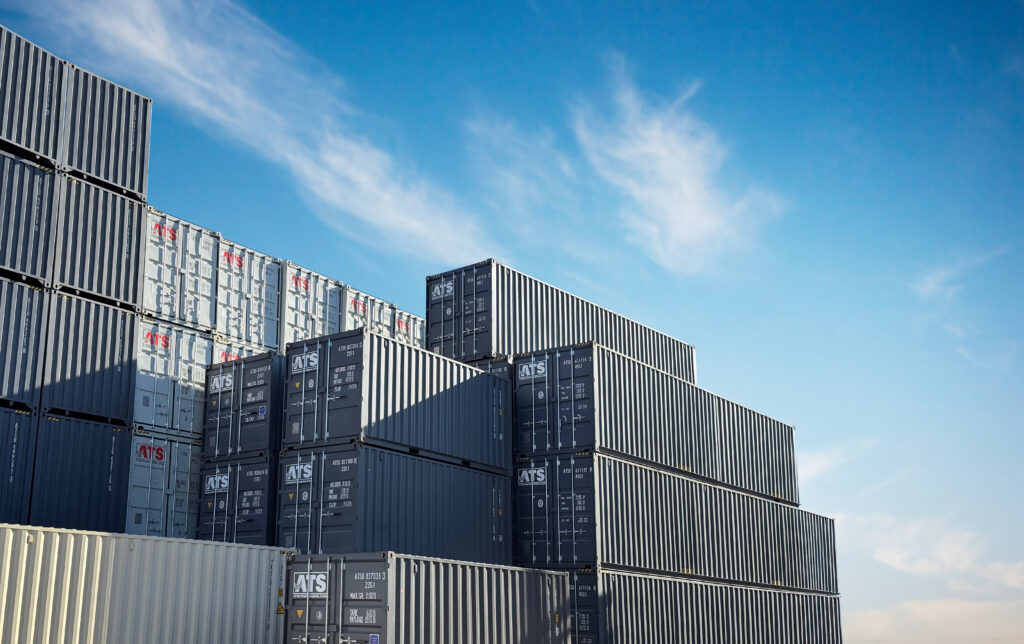
Before a container ever moves, yard teams ensure it is truly ready. Units are verified, inspected, and, when needed, repaired before being repositioned across the yard in a carefully coordinated sequence. Doors are checked, structural condition is verified, identification is confirmed, and handling procedures are followed. Yard work is not only about equipment movement. It is about risk management.
Yard operations also serve as the point of connection between internal teams and external transporters. Clear communication with transporters ensures containers are staged correctly, load plans are understood, and timing is aligned before departure. When yard teams and transport partners are working in sync, pickups are smoother, safer, and more efficient. When a container has been properly verified and prepared, delivery becomes more controlled, safer, and easier to execute.
Management: Setting Direction and Ensuring Alignment
Management plays a central role in how container logistics operates day to day. These teams establish processes, set priorities, and ensure that operations, coordination, and yard activity remain aligned as projects move forward.
Management positions help create clarity across departments by defining workflows, approving procedures, and supporting teams through changing site conditions and seasonal demands. This oversight ensures that logistics functions as a connected system rather than a series of disconnected steps.
By focusing on structure, accountability, and long-term planning, management helps maintain consistency and reliability across container operations.
Marketing: Where Information Brings Ideas to Life
Marketing plays an active role in how container logistics functions. It connects operational realities with customer decision-making by shaping how services are positioned, explained, and understood.
Beyond promotion, marketing helps define what customers should expect from a container delivery, including site readiness, access requirements, and practical constraints. At the same time, it shows what is possible. By featuring real container uses, modification ideas, and creative applications, marketing helps customers envision how containers can support their projects before any technical decisions are made.
Through educational content, accurate product information, and clear delivery guidance, marketing supports informed choices long before a container reaches a site. When marketing is closely aligned with operations, it helps standardize expectations, build confidence, and reinforce trust, contributing directly to safer, more efficient logistics.
Women Shaping Operational Excellence
Women working across container logistics bring professional expertise to roles that demand accuracy, coordination, and sound judgment. In office operations, coordination, management, and planning functions, women apply structured processes that keep deliveries moving smoothly from booking to placement.
Their work shows up in practical ways: verifying details early, maintaining clear documentation, guiding customers through site preparation, and coordinating across teams to ensure information stays consistent. These skills are developed through experience and responsibility, not through gender, and they directly influence safety, efficiency, and customer outcomes. In an industry where logistics errors can have real operational and safety consequences, this level of discipline matters. Women are not only present in these roles, they are actively shaping how modern container logistics is executed day to day.
Where the Industry is Heading
The container industry continues to evolve. Sites are more complex, configurations more specialized, and customer expectations higher. The companies that stand out are those that treat logistics as a professional discipline rather than an afterthought.
Women are helping modernize that discipline across the entire chain, from customer coordination and operational systems to yard procedures and transporter support. The results are practical and measurable: safer deliveries, clearer communication, and stronger service.
If you work in container logistics, whether in administration, coordination, yard operations, management, marketing, or transport, your role is part of what keeps the system functioning. Increasingly, that work is being shaped by women whose expertise, judgment, and leadership are embedded in the everyday decisions that move containers safely and efficiently.
In an industry long defined by physical assets, the future of container logistics will continue to depend on the people and systems behind them. The more those contributions are recognized and supported, the stronger and more resilient the industry becomes.

About ATS Containers
ATS Containers is Canada’s largest supplier of new and used shipping containers. With yards across the country, ATS specializes in sales, rentals, and custom modifications. From storage and mobile offices to kiosks and custom projects, ATS is known for delivering practical, cost-effective container solutions across many industries. Learn more at www.atscontainers.com or call 1-866-846-0270.
Leave a Reply